
Regions
Nepal's Himalaya: A Region-by-Region Guide to Where to Trek
From Kanchenjunga in the east to Humla in the far west — nine trekking regions, eight of the world's 8,000 m peaks, and the treks that take you into each one.

Cost Guide
Most trekkers spend $1,400–$2,600 on a standard 12–14 day guided trek. Permits, the Lukla flight, teahouses, guides, and the costs people forget — broken down piece by piece.
If you're planning the Everest Base Camp Trek, the number you actually need is this: most trekkers spend between roughly $1,400 and $2,600 on a standard 12–14 day guided teahouse trek booked with a Nepali operator, all-inclusive from Kathmandu back to Kathmandu. Independent trekkers who arrange permits, guides and teahouses themselves can sometimes come in lower, but by the time flights, permits, staff and gear are added up, the difference is often smaller than people expect. Premium or internationally run trips can run considerably higher — sometimes $3,000–$4,500 — for smaller groups, better lodges and more built-in support.
This guide breaks that number down piece by piece — permits, the Lukla flight, teahouse food and lodging, guide and porter fees, and the extra costs people forget — so you know exactly what you're paying for and where you have room to adjust your budget.
| Quick facts | |
|---|---|
| Duration | 12–14 days (Lukla to Lukla), most itineraries |
| Max altitude | Everest Base Camp 5,364 m; Kala Patthar 5,545 m (optional side trip) |
| Difficulty | Moderate to challenging — long trekking days and high altitude, no technical climbing |
| Best seasons | Spring (March–May) and autumn (September–November) |
| Starting point | Lukla, reached by a short flight from Kathmandu (or Ramechhap during peak-season diversions) |
| Permits required | Sagarmatha National Park entry permit + Khumbu Pasang Lhamu Rural Municipality entry permit |
| TIMS card | Not required for the Everest/Khumbu region — replaced by the municipality permit |
Before comparing prices between operators — or between a guided trip and going independently — it helps to know what a "complete" cost actually covers. A properly priced Everest Base Camp trek should account for:
What's usually not included, even in a package price, is travel insurance, Kathmandu hotel nights before and after the trek, personal gear, tips, and anything you buy on the trail — WiFi, hot showers, snacks, and battery charging all cost extra the higher you climb.
The Everest region trek requires two permits, both purchased in Nepal: the Sagarmatha National Park entry permit (NPR 3,000, about $22, for foreign nationals; NPR 1,500 for SAARC nationals), and the Khumbu Pasang Lhamu Rural Municipality entry permit (NPR 3,000, about $22), which replaced the old TIMS card for this specific region. If you're trekking a different route — Annapurna, Manaslu, Langtang — you may still need a TIMS card or a different area permit, so don't assume this rule carries over.
Flights to Lukla currently run around $230–240 one-way, so budget close to $480 for the round trip. During the busiest weeks of spring and autumn, flights are sometimes rerouted through Ramechhap instead of Kathmandu, adding a 3–4 hour road transfer each way. Weather delays are common on this sector — build a spare day or two into your schedule on both ends rather than booking an international flight home for the same day you're due back in Kathmandu.
This is the cost that surprises first-time trekkers most, because it isn't flat across the trek. Lower down the trail, a teahouse room might cost $3–5 a night (often free with meals purchased there) and a meal $3–7. By the time you reach Gorak Shep, near Everest Base Camp itself, rooms can run $10 or more and meals $10–20, since everything has to be carried or flown in. Over 12–14 days, most trekkers land in the $20–30/day range, higher on the last few days near base camp.
Hiring a licensed local guide typically costs $25–35 per day, with experienced or specialized guides charging more. A porter, who will typically carry up to 15–20 kg for one or two trekkers, runs about $20–25 per day. If you book a guided package, these costs are already folded in; on a trek that climbs above 5,000 metres, a guide's judgment on pacing and altitude symptoms is worth far more than the daily rate.
Put all of that together, and a standard 12–14 day guided teahouse trek with a Nepali operator typically lands between $1,400 and $2,600 per person, depending on group size, season, and exactly what's bundled in. Group departures spread the cost of the guide, permits, and transport across more people — usually the single biggest way to lower your price. Premium and internationally run operators can charge $3,000–$4,500 or more for the same route, reflecting smaller groups and a higher level of built-in support rather than a different trek. There's no single "correct" price — the honest way to compare quotes is to check exactly what's included rather than comparing headline numbers alone.
For most trekkers, yes — but it depends what you're comparing it to. Compared to other major Nepal treks, EBC sits in the middle of the price range: pricier than the shorter Annapurna Base Camp Trek or Langtang Valley Trek, broadly similar to the Manaslu Circuit, and less expensive than fully custom or heli-supported itineraries. What you're paying for beyond the trail itself is the Lukla flight, the remoteness of the Khumbu region, and the infrastructure that makes it possible to sleep in a warm bed and eat a hot meal every night above 4,000 metres.
Is $1,500 enough for the Everest Base Camp Trek?
It can be, at the lower end of the standard range, particularly on a group departure in a less crowded season. It typically won't leave much room for gear rental, extra buffer days, or higher-end lodges, so it's worth building in a small contingency.
Does the Everest Base Camp Trek cost include the Lukla flight?
Most guided packages include it, but always confirm — it's one of the largest single line items on the trip, and some operators quote a package price that excludes it.
Do I need cash on the trail, or can I pay by card?
Cash. There are no reliable card payment options once you're on the trail, and ATMs become unreliable past Namche Bazaar. Bring more Nepali rupees than you think you'll need, in small denominations.
Is it cheaper to trek Everest Base Camp independently, without a guide?
It can be marginally cheaper on paper, since you're not paying a guide's day rate, but permits, flights, and teahouse costs are the same either way, and a guide plays a real safety role at altitude.
Why do prices rise so much near Everest Base Camp itself?
Everything above Namche Bazaar — food, fuel, building materials — has to be carried in by porter or yak, or occasionally flown in. The closer you get to base camp, the further that supply chain stretches.
Every trekker's budget looks a little different depending on season, group size, and how much you want built in versus arranged yourself. Get in touch with Genesis Himalaya Treks for a cost breakdown built around your dates and group size, or see our Everest Base Camp Trek package for what's included as standard.
Prices, permits and regulations in this guide reflect research current as of early 2026. Costs change — always confirm current figures with your operator or the relevant Nepali authorities before booking.
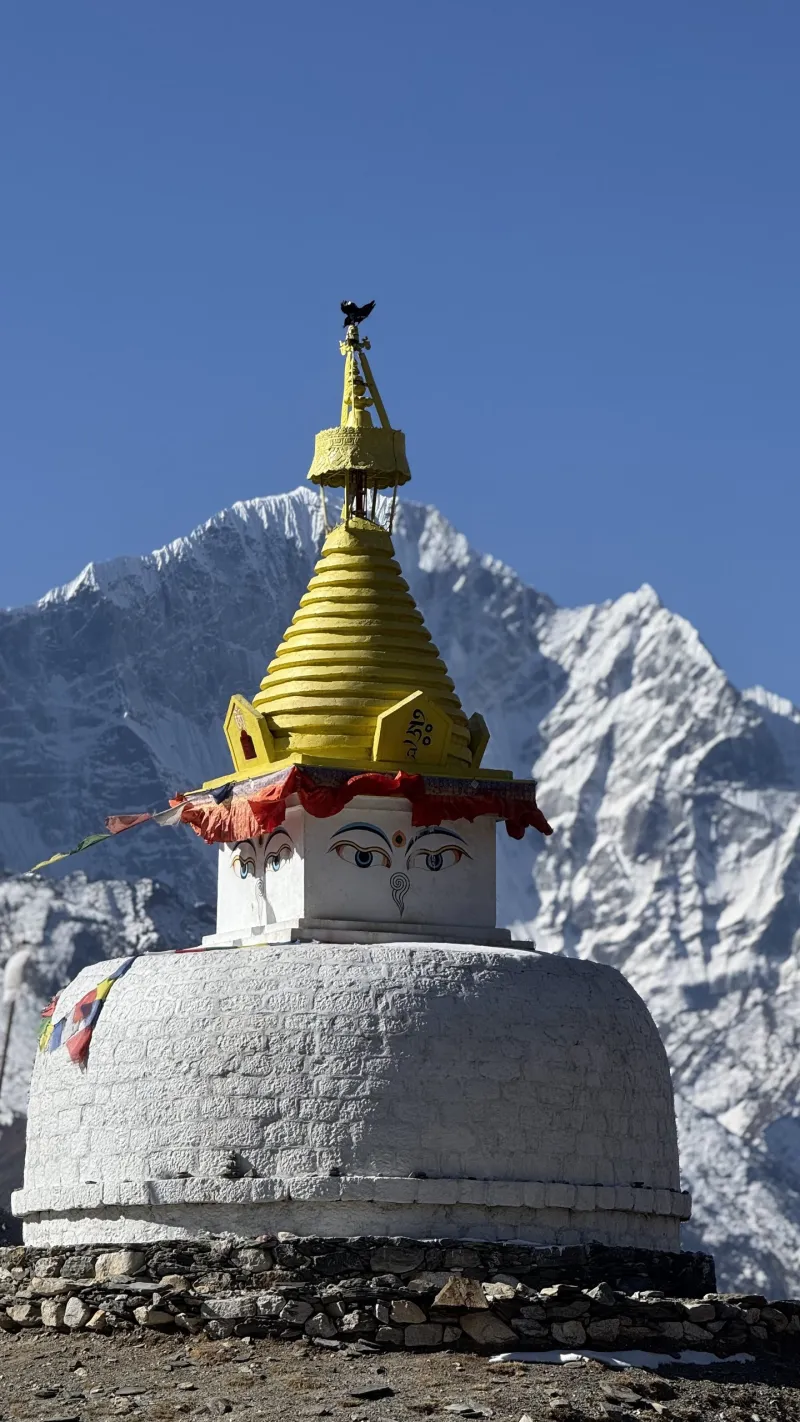
The trek behind this guide
13 Days / 12 Nights · Challenging · Khumbu Region, Nepal
See the itinerary
Regions
From Kanchenjunga in the east to Humla in the far west — nine trekking regions, eight of the world's 8,000 m peaks, and the treks that take you into each one.

Trip Planning
The Annapurna region isn't one trek — it's four very different trips that happen to share a mountain range. Here's how to tell them apart on time, difficulty, cost, and what you'll actually see.

Cost Guide
Roughly $600–$1,200 for a standard 7–10 day trek — Nepal's most budget-accessible major route, mainly because there's no flight to the trailhead.
Guides who have walked the route answer these directly — altitude, permits, kit, or which season suits you. Ask, and you’ll hear back from someone who has been there.